Suppliers
We have a long-standing, trusting relationship with many of our main suppliers. In order to improve our own value creation, we must recognise our responsibility, exert our influence and enter into active dialogue with the other participants in the supply chain. Together with them, we aim to give greater consideration to social and environmental aspects.
Sourcing based on defined criteria
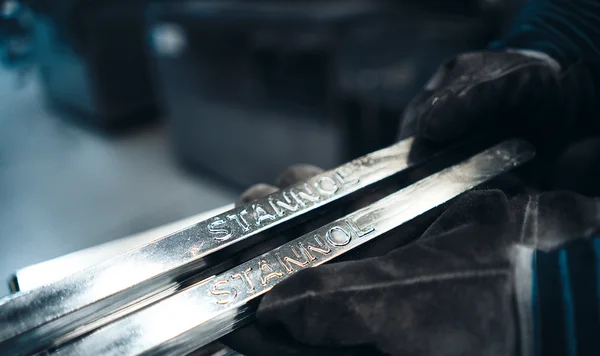
For many years, we have worked with suppliers and mines selected according to defined social and environmental criteria. In addition, we source high-quality secondary tin and are expanding our cooperation with qualified recycling companies. Through this long-standing experience, we understand both the processes and the challenges involved in switching to products made with secondary raw materials or subject to defined sourcing criteria.
Code of Conduct
Since 2021, our Code of Conduct has required our existing suppliers to comply with defined minimum requirements in the areas of environmental protection, social responsibility and compliance. These requirements were established with reference to relevant United Nations Sustainable Development Goals (SDGs). The standards are mandatory when selecting new suppliers, with a focus on social and environmental criteria as well as material compliance. Our aim is for all suppliers we work with to meet these minimum standards in the future.
Digital Product Passport (DPP)


Another step towards greater transparency and traceability of product information in the supply chain is the introduction of the Digital Product Passport (DPP). This digital product record brings together key product information, including details on materials, compliance and recycling.
Stannol launched the DPP project in 2024 and introduced the passport in 2026. The DPP includes the Product Carbon Footprint (PCF), RoHS and REACH compliance information, technical data sheets, safety data sheets, material compositions and information on recycled content.
Data from internal systems is consolidated in a central data lake and will be accessible via a website using the relevant product and batch numbers. A QR code on the products will provide additional, convenient access. In this way, Stannol aims to improve access to relevant product and compliance information.
Use of secondary tin
A large proportion of the greenhouse gas emissions recorded by Stannol arise in the supply chain. The use of secondary tin can reduce the demand for primary tin and the associated raw material-related greenhouse gas emissions. For this reason, we are increasingly using secondary tin sourced from European recycling companies. In this way, tin that has already been extracted is returned to the material cycle.
Transport and logistics
Through careful logistics planning, Stannol aims to avoid or shorten transport routes within its control.
Where possible, we source products from suppliers in our region, Germany or Europe. However, this is not possible for many raw materials.
We therefore work with selected logistics providers that implement measures to reduce transport-related greenhouse gas emissions and transparently document the offsetting of remaining emissions.
In dialogue with the customer
Our customers are at the centre of everything we do. They rightly expect excellent and reliable services from us. In addition to close personal support through our established sales network, Stannol conducts international customer surveys at regular intervals.
Stannol uses various platforms for interaction, such as trade fairs and specialist forums, and actively organises presentations as well as innovation and sustainability events to address emerging requirements at an early stage and promote dialogue on the environmental and social aspects of collaboration.
Stannol also offers online seminars on current and industry-specific topics. There is deliberately an intensive exchange that is intended to deepen cooperation and is used for joint action and progress.