
Reporting according to DNK
For our sustainability reporting, it was important for us to select a standard that, on the one hand, places appropriate requirements on us as a middle-sized enterprise and, on the other hand, provides a recognised basis with broad acceptance. The decision was made in favour of the German Sustainability Code (DNK), whose criteria provide a structured overview of our activities in the area of sustainability. They also make it possible to assess and compare our disclosures using consistent criteria.
In the reporting years 2022 to 2024, we aligned our sustainability reporting with the DNK Standard and reported in accordance with the criteria required under it, including the areas of strategy, process management, the environment and society.
In September 2026, we published our first voluntary sustainability report based on the VSME standard (Voluntary Sustainability Reporting Standard for non-listed SMEs) for the 2025 reporting year was published. It is available in the DNK database (in German).
Our motivation
Stannol aims to play an active role in shaping change within the industry and has already implemented concrete measures through its long-established Fairtin concept and the greenconnect product range. As a medium-sized company, we are addressing the challenges of the current structural transformation. For us, it is essential to actively shape both the environmental and digital transition and to continuously develop our business practices. In the future, we also aim to demonstrate how social and environmental considerations can be combined with commercial success.

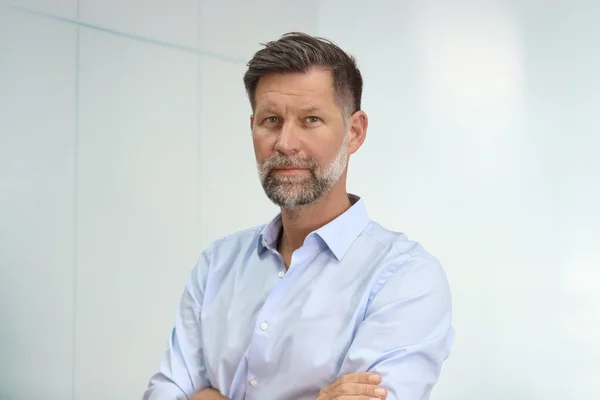
Social responsibility for environmental protection and sustainability does not only lie with politicians and people. Companies are also an essential part of society. They must learn to take responsibility for their actions. Up to now, we have thought two-dimensionally, focusing primarily on price and quality. Now a third dimension has been added: sustainability. Future generations must not be limited in their future opportunities by our actions today.
Marco Dörr,
Managing Director of Stannol GmbH & Co KG
Our goals
Our goal is to gradually reduce the environmental and climate impacts of our business activities. To achieve this, we consider defined social and environmental criteria when selecting our business partners, work to improve the traceability of our raw material supply chains, and continuously develop our operational measures. These include initiatives to reduce energy and resource consumption at our sites.
Sustainability has also been included as a focus topic in our corporate strategy. Therefore, in 2022, we informed all our employees about this approach. Together, we developed detailed strategies with binding targets for the respective departments. These will be implemented individually with corresponding measures in 2023.
Proceed according to relevance
Our greenhouse gas inventory shows that the metals and chemicals used account for the largest share of the emissions recorded. Reducing these raw material-related emissions therefore represents a particular challenge. Beyond that, we also want to change things on a small scale, take suppliers, customers and employees with us on this journey, engage in ongoing dialogue and act accordingly. We have learned that you have to face the issue and start. Every contribution counts.

0 %
CO₂ reduction
Reduction in recorded operational greenhouse gas emissions compared with the 2019 baseline year¹

0 %
Electricity from renewable energy sources
Share of electricity from renewable energy sources in total electricity procurement²

0 %
E-mobility
Share of fully electric vehicles in Stannol’s vehicle fleet³
74
CO₂ reduction
Reduction in recorded operational greenhouse gas emissions compared with the 2019 baseline year¹
100
Electricity from renewable energy sources
Share of electricity from renewable energy sources in total electricity procurement²
59
E-mobility
Share of fully electric vehicles in Stannol’s vehicle fleet³
Our fields of action
Four areas of action form the framework for our sustainability management. Our aim is to consider economic, environmental and social aspects, as well as the principles of responsible corporate governance, in our business decisions. With the involvement of all departments, we analyse and review the current situation, identify areas for development and action, and derive strategies and short-, medium- and long-term measures.
We view sustainability as a cross-departmental responsibility and consider taking action essential. We recognise that we need to rethink our approach in many areas and be prepared to move beyond our established practices.
Products and development
Creativity is a key success factor in developing products that take environmental and social considerations into account. Incorporating these considerations into product development also requires a willingness to embrace change. However, this can only succeed if it is recognised that there is a real need for action. We are aware of this and took the first steps early on.
Value creation and supply chain
To improve our own value creation, we need to recognise our responsibility, exert our influence and engage in dialogue with other stakeholders in the supply chain. In this way, we can identify possible courses of action and make informed decisions that give greater consideration to environmental and social aspects. This applies to purchasing and service processes, but also to the sequence of business activities in which value is created.
Environment and production sites
We aim to future-proof our production while giving greater consideration to environmental aspects. We rely on automation and digitalisation to optimise work steps and processes. Since 2015, we have been certified according to ISO 14001 in the area of environmental management. Within this framework, we focus on the responsible use of natural resources, the efficient use of energy and raw materials, waste minimisation, and targeted risk prevention.
Employees and society
Our employees are the foundation of our success. Through individual training, flexible working time models and modern occupational health and safety measures, we want to create an environment in which our employees feel comfortable. Social commitment is also important to us as a traditional company. We are particularly involved in charitable local projects.
1 Accounting of operational greenhouse gas emissions (Scope 1 and market-based Scope 2) for all German sites: Velbert, Schrobenhausen and Wülfrath until April 2025. Calculations were performed using the ecocockpit tool. Sources covered: natural gas, heating oil and the vehicle fleet (Scope 1), as well as purchased electricity (Scope 2). Calculated in accordance with the Greenhouse Gas Protocol (2004 version). Baseline year 2019: 714.9 t CO2e; reporting year 2025: 183.4 t CO2e. Further information is available in the 2025 Sustainability Report (in German), disclosures B3 and C3.
2 Since May 2025, all German sites have sourced 100 percent of their electricity from certified renewable sources. Evidence is provided by the electricity supply contract and the supplier’s renewable electricity certificate. A breakdown for the full year is available in the 2025 Sustainability Report (in German), disclosure B3.
3 Share of fully electric vehicles in the company fleet. Reference population: all company vehicles; reporting date: 31 December 2025. Of the 17 vehicles, 10 are fully electric, corresponding to approximately 59 percent.